


Use large roof assets
Turn otherwise unused warehouse roof space into on-site electricity generation.

Warehouse solar turns large roof areas into working energy assets. We design systems around distribution-centre demand, landlord and tenant responsibilities, fleet charging and future electrification.
Large roof planes and daytime electricity demand can make warehouses strong candidates for solar. The best design accounts for operations, leases, roof warranties and future fleet charging.
Turn otherwise unused warehouse roof space into on-site electricity generation.

Offset grid use for lighting, conveyors, offices, refrigeration and handling equipment.

Coordinate generation with future depot and staff vehicle charging demand.

Metered renewable generation supports credible occupier and property reporting.

Storage and controls can help manage peaks and constrained connections.
Swipe to explore →
Metal, membrane and composite-panel roofs can all be candidates. Usable capacity depends on structure, condition, warranty, fire strategy and roof obstructions.
Ownership and consent should be clear before detailed design. We account for lease terms, repairing obligations, roof warranties, insurer requirements and how the installation will be treated at lease end.
A cold store has a different energy profile from a parcel hub or ambient warehouse. We use operating data to match the system to the site.
Lighting, conveyors and long operating hours can support high self-consumption.
Refrigeration creates substantial, consistent demand across the year.
Sorting equipment and extended shifts can use generation directly.

Multi-building estates may support phased or landlord-led installations.
Solar, storage and charging can be planned as one energy system.
Swipe to explore →
Rooftops usually provide the greatest opportunity, while carports, batteries and chargers can support wider site plans.
Large, low-pitch roofs can accommodate significant arrays close to operational loads. Structural capacity, roof condition and fire-safety zones determine the usable layout.
Carports add generation where roofs are constrained and place power close to charging bays. Load management helps coordinate chargers with the building and grid connection.
The two approaches can work separately or together across larger depots and logistics parks.
| Consideration | Warehouse rooftop | Solar carport |
|---|---|---|
| Best suited to | Large sound roof planes | Parking or fleet yards |
| Operational space | No ground area required | Retains vehicle space beneath |
| Fleet charging | Feeds chargers through site network | Generation positioned near bays |
| Key checks | Structure, warranty and fire strategy | Traffic, impact protection and planning |
Storage can move surplus solar, manage peak demand and support charging where the data shows a clear operational and financial benefit.
We model half-hourly demand, solar output, tariffs, export value and planned charging. Backup requirements need separate design because ordinary grid-connected storage does not automatically keep a depot operating during an outage.
100% AIA
Potential Annual Investment Allowance, subject to eligibility
25+ yrs
Expected solar panel operating life
4 steps
From energy review to monitored generation
30 min
Interval data used to model warehouse demand
These broad examples show how roof capacity and on-site use can shape a warehouse solar investment.
| System size | Typical setting | Indicative installed cost | Illustrative annual saving | Indicative payback |
|---|---|---|---|---|
| 50–100 kWp | Small warehouse or depot | £45,000–£90,000 | £12,000–£28,000 | 4–7 years |
| 100–250 kWp | Distribution centre | £85,000–£200,000 | £25,000–£65,000 | 4–7 years |
| 250–500 kWp | Large warehouse or cold store | £190,000–£375,000 | £55,000–£130,000 | 4–8 years |
| 500 kWp+ | Logistics park or major hub | Site specific | Site specific | Site specific |
Figures are illustrative estimates, not quotations or guaranteed returns. Actual costs, savings and payback depend on site conditions, electricity tariffs, on-site consumption, export value, finance, grid requirements and final system design. Tax treatment depends on your circumstances; seek advice from your accountant.
Warehouse projects often involve several stakeholders. Aligning property, operational and electrical requirements early helps avoid delay.
We identify landlord consent, lease obligations, roof warranties, insurer requirements, fire strategy, access routes and any interaction with roof replacement plans.
The network operator confirms import and export capacity. Solar, battery storage and fleet charging should be assessed together where electrification could materially change future demand.
Swipe to explore →
A strong logistics design balances roof capacity with the electricity the occupier can use, now and as fleet charging expands. Ownership and lease responsibilities are addressed alongside the technical design.
Your proposal uses site-specific data and survey findings. Illustrative examples and other projects are not treated as guaranteed performance.
View Logistics Case Studies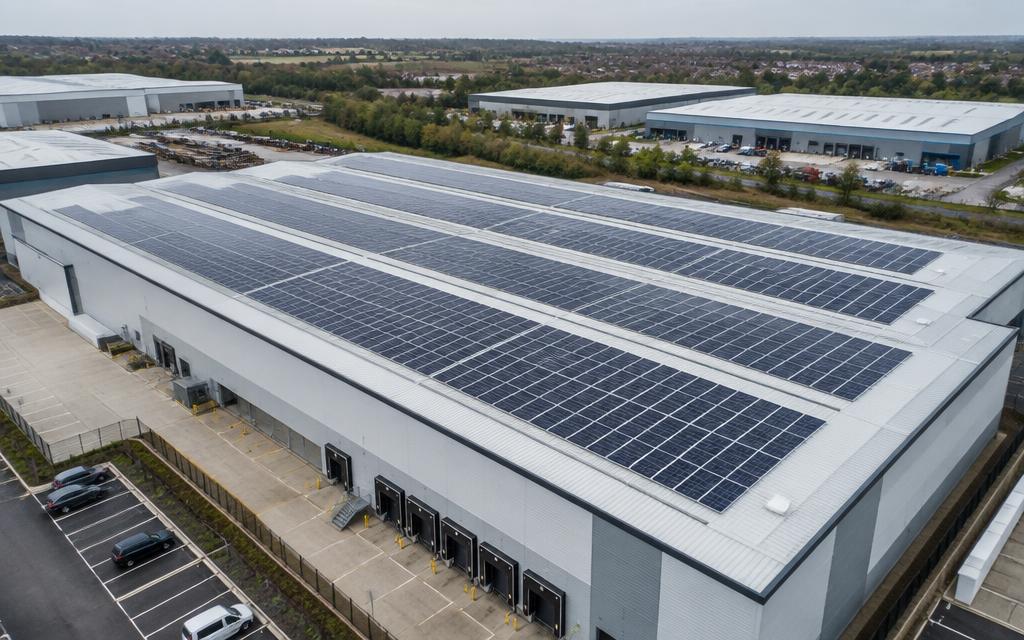
Cut your grid electricity use with roof-mounted solar PV sized to your building.
Learn More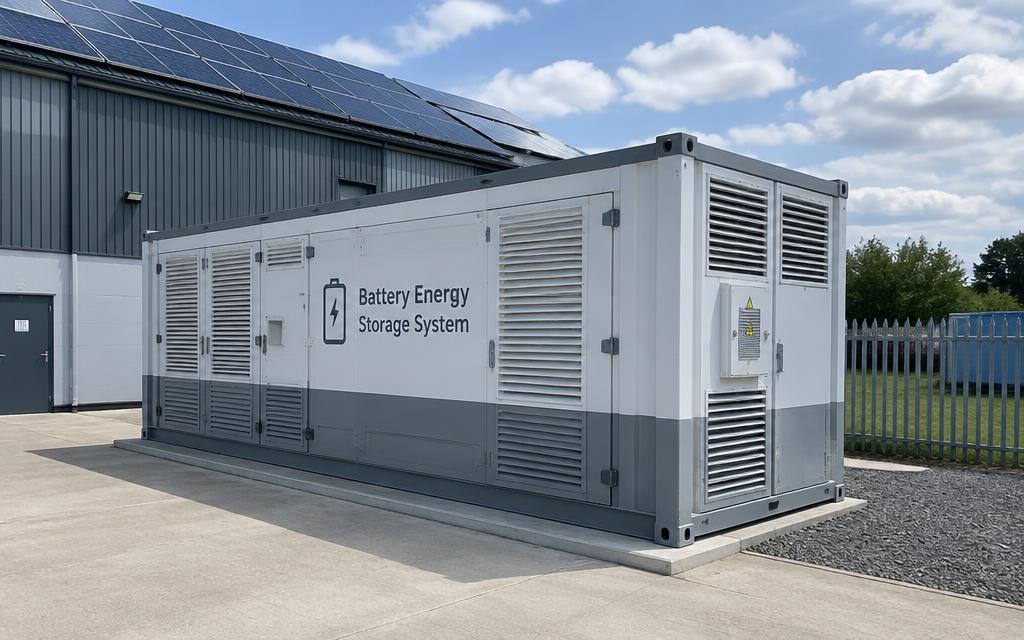
Store surplus solar generation and use it when demand and costs are highest.
Learn More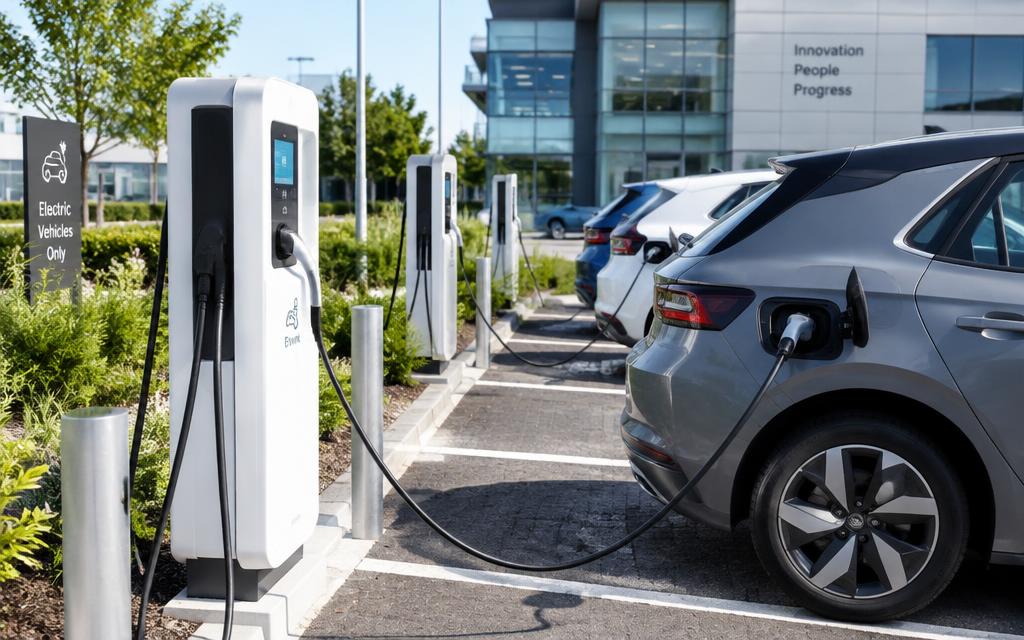
Future-proof your site with commercial EV charging infrastructure.
Learn More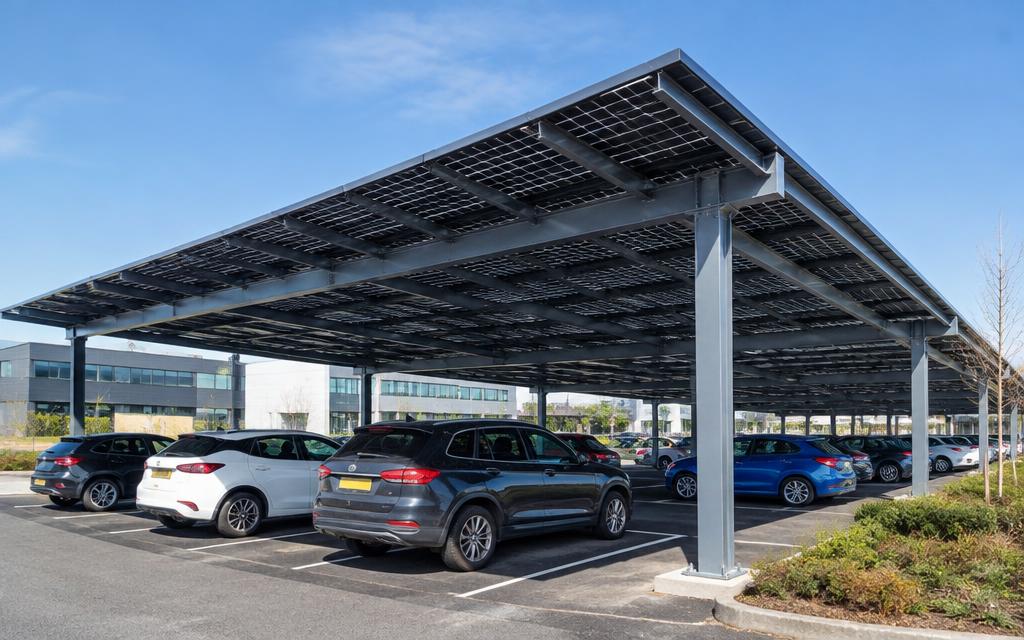
Turn your car park into a generation asset while sheltering vehicles.
Learn MoreSwipe to explore →
Large roof projects need coordinated technical design, clear stakeholder responsibilities and installation planning that keeps vehicles and goods moving.
We manage survey, design, network applications, installation and monitoring while coordinating access around loading bays, vehicles and shifts.
We can assess solar, batteries and EV charging together so today's project does not overlook tomorrow's fleet and power requirements.
Horizon Commercial Solar is fully accredited and MCS certified. Every installation meets the highest standards for design, safety and performance.









Often, yes. The fixing method depends on the roof profile, condition, structure and warranty. These are checked before the design is finalised.
Ownership depends on the lease and funding structure. Landlord consent and responsibilities for maintenance, insurance and lease end should be agreed before installation.
The programme is planned around loading bays, vehicle routes and shifts. Most roof work can take place above operations, with any electrical shutdown agreed in advance.
Yes, but charging demand, vehicle dwell times and grid capacity should be modelled together. Load management and batteries may help on constrained sites.
It can be where operations continue outside solar hours, demand peaks are costly or export is constrained. Interval data is essential to test the case.
Reroofing or major repairs are usually best coordinated before solar installation to protect warranties and avoid removing and reinstalling panels later.
Some rooftop systems may qualify as permitted development, subject to conditions. Carports, ground-mounted systems and constrained sites may need an application.
Surplus can be exported, stored or used for flexible loads such as charging. The system is normally sized to prioritise useful on-site consumption.
Remote monitoring identifies unusual performance. Planned inspections, electrical testing and condition-led cleaning support safe operation.