


Lower operating costs
Use electricity generated on site before buying power from the grid, supporting stronger margins.

Industrial solar panels turn large factory roofs into productive energy assets. We design rooftop solar and battery systems around your production profile, helping reduce grid costs without compromising day-to-day operations.
Commercial solar panels can reduce a major controllable production cost. The strongest designs match generation to machinery, extraction, refrigeration, compressed air and other daytime loads.
Use electricity generated on site before buying power from the grid, supporting stronger margins.

Large industrial roofs can host meaningful solar capacity without using operational floor space.

Metered on-site generation provides credible evidence for Scope 2 and customer sustainability reporting.

Eligible systems may qualify for capital allowances, subject to current rules and professional advice.

A well-designed system reduces exposure to future grid electricity price changes.
Swipe to explore →
Factories, production halls, workshops and industrial units can all be suitable. We assess the building and electricity infrastructure together before recommending a system size.
The installation plan considers shifts, deliveries, hygiene-controlled zones, roof warranties and critical processes. Where reroofing or structural work is due, coordinating it before solar installation can avoid duplicated cost and disruption.
Each facility has a different demand profile. We model the equipment and operating hours that drive consumption rather than applying a standard watts-per-square-metre assumption.
Daytime machinery and extraction can align strongly with solar output.

Refrigeration, processing and hygiene systems create consistent electrical demand.
CNC equipment, compressed air and workshops can use generation directly.

Designs can reflect landlord supplies, tenant meters and shared infrastructure.
Detailed interval data helps establish the realistic contribution solar can make.
Swipe to explore →
The right system depends on roof capacity, operational demand, site ownership and plans for electrification.
Industrial roofs often provide unobstructed space close to the point of consumption. A structural survey, fixing design and roof-warranty review establish what can be installed safely.
Car parks or available land can add generation where roofs are constrained. Solar carports can also support staff and fleet charging while retaining parking beneath.
Some industrial sites use one approach; larger estates may combine them to increase useful generation.
| Consideration | Rooftop solar | Solar carports |
|---|---|---|
| Best suited to | Sound, accessible factory roofs | Large staff or visitor car parks |
| Use of space | Uses existing roof area | Retains parking beneath the canopy |
| EV integration | Can feed chargers elsewhere on site | Can place generation beside charge points |
| Key checks | Structure, roof warranty and fire strategy | Ground conditions, traffic flow and planning |
A commercial battery can shift surplus generation, reduce peaks or support tariff optimisation when the operating profile justifies it.
We compare interval demand with forecast solar production and model tariffs, export value, usable capacity and cycle life. Backup operation is designed separately because a standard grid-connected battery does not automatically power the whole factory during an outage.
100% AIA
Potential Annual Investment Allowance, subject to eligibility
25+ yrs
Expected solar panel operating life
4 steps
From energy review to monitored generation
30 min
Interval data used to model demand
These broad examples show how system scale and daytime consumption can affect the investment case for manufacturing solar.
| System size | Typical setting | Indicative installed cost | Illustrative annual saving | Indicative payback |
|---|---|---|---|---|
| 50–100 kWp | Workshop or smaller factory | £45,000–£90,000 | £12,000–£28,000 | 4–7 years |
| 100–250 kWp | Medium production site | £85,000–£200,000 | £25,000–£65,000 | 4–7 years |
| 250–500 kWp | Large factory or multi-unit site | £190,000–£375,000 | £55,000–£130,000 | 4–8 years |
| 500 kWp+ | Large industrial estate | Site specific | Site specific | Site specific |
Figures are illustrative estimates, not quotations or guaranteed returns. Actual costs, savings and payback depend on site conditions, electricity tariffs, on-site consumption, export value, finance, grid requirements and final system design. Tax treatment depends on your circumstances; seek advice from your accountant.
Early technical checks reduce risk and help establish a realistic programme for an operational industrial site.
We coordinate structural surveys, roof warranties, fire strategy, access, delivery routes and shutdown requirements. Installation phases can be planned around production schedules and critical areas.
The network operator confirms export capacity and any required reinforcement or limitation. We manage the application and assess options such as export control, battery storage or phased installation where capacity is constrained.
Swipe to explore →
A well-planned factory installation starts with the real production load, not simply the available roof area. This allows the design to prioritise electricity that can be used directly on site.
Every proposal sets out its own generation, savings and payback assumptions. We do not use one site's results as a guarantee for another facility.
View Manufacturing Case Studies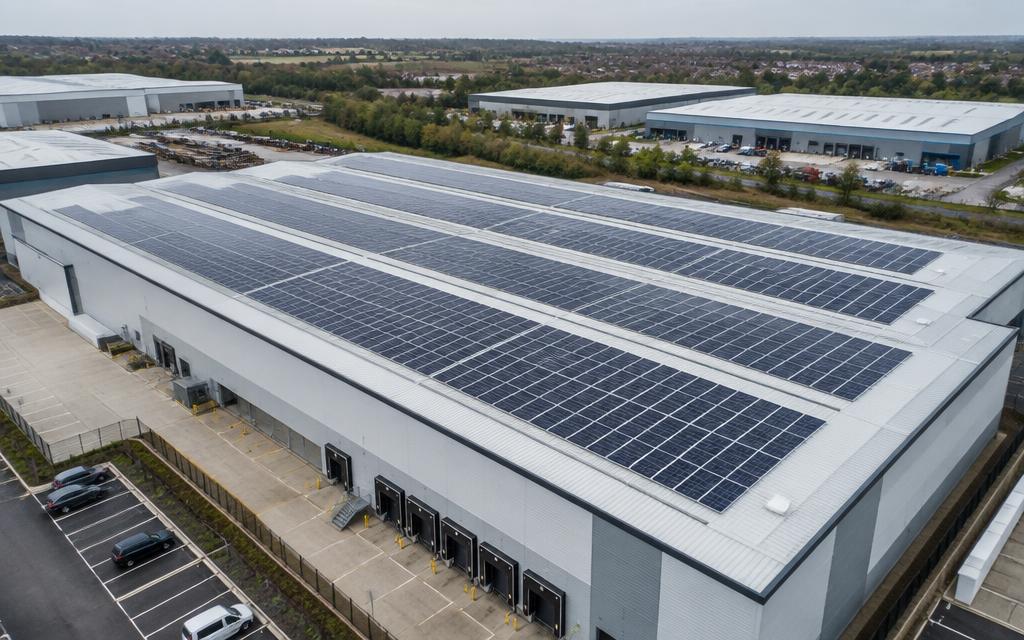
Cut your grid electricity use with roof-mounted solar PV sized to your building.
Learn More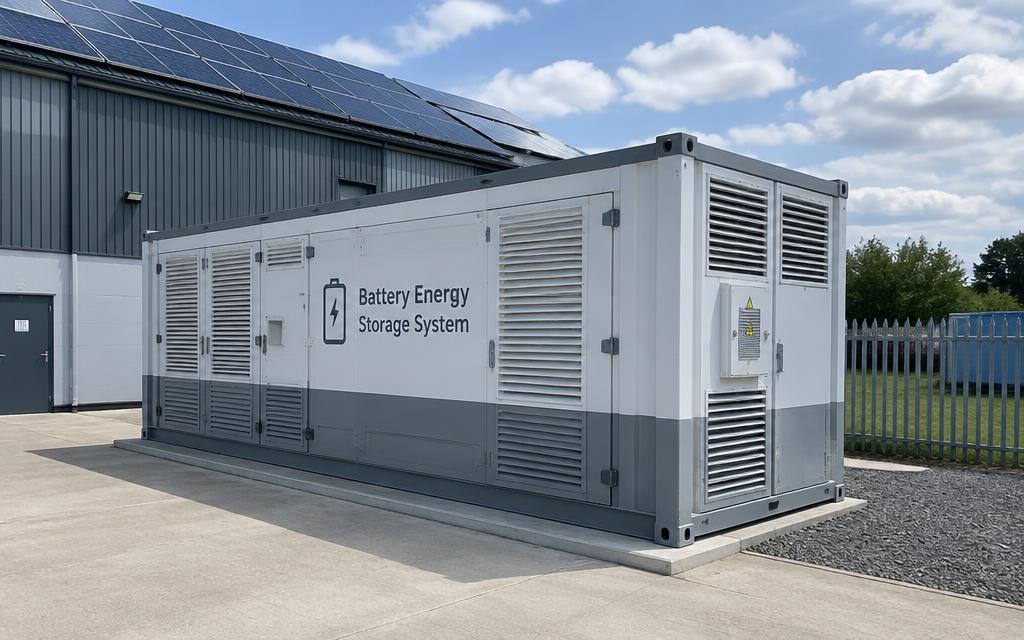
Store surplus solar generation and use it when demand and costs are highest.
Learn More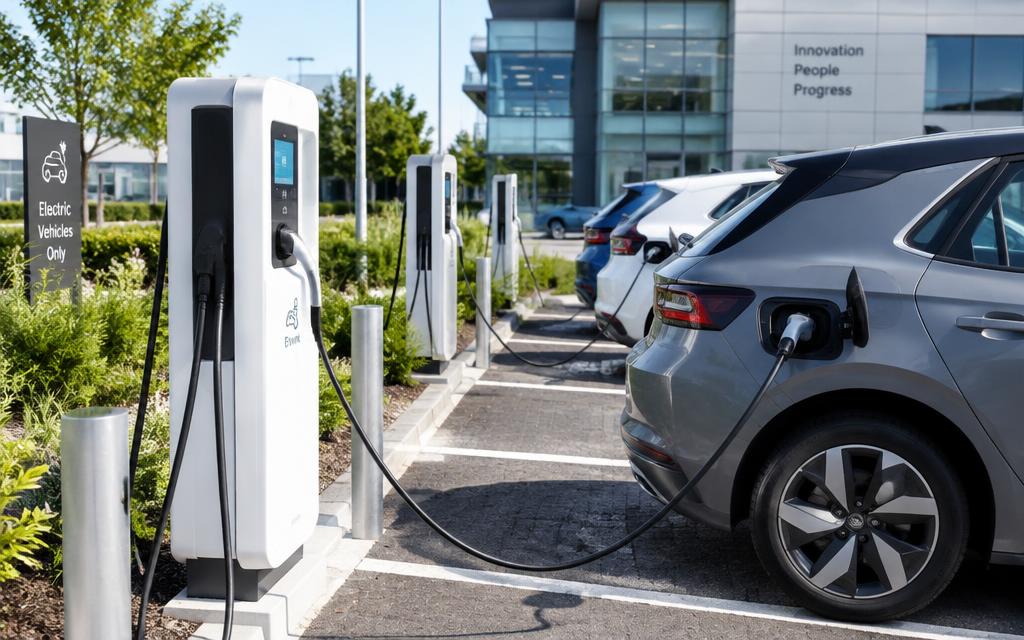
Future-proof your site with commercial EV charging infrastructure.
Learn More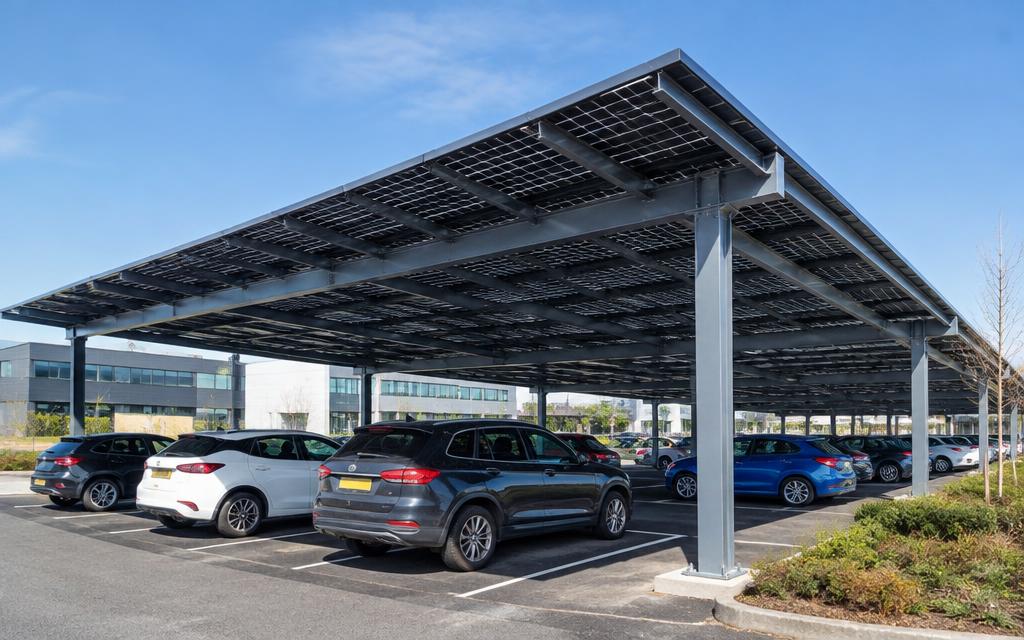
Turn your car park into a generation asset while sheltering vehicles.
Learn MoreSwipe to explore →
Industrial installations need robust design, realistic financial modelling and a programme that respects production and site safety.
Our team manages survey, design, grid applications, installation, commissioning and monitoring, keeping responsibility clear throughout the project.
We use your consumption profile and site constraints to show where solar, storage and charging can add value without overstating likely returns.
Horizon Commercial Solar is fully accredited and MCS certified. Every installation meets the highest standards for design, safety and performance.








Solar can offset part of a facility's electricity use, particularly where production runs during daylight hours. The realistic contribution depends on demand, roof capacity and grid constraints.
Cost depends on system size, roof type, access, electrical works and grid requirements. We provide a site-specific quotation and clearly state every modelling assumption.
Work is planned around shifts, deliveries and critical areas. Many roof tasks can take place without entering production spaces, although electrical connections may require an agreed shutdown.
Often, yes. The fixing system depends on the roof profile, condition, structure and warranty requirements, all of which are checked before design is finalised.
It can be where demand extends beyond solar hours or short peaks carry a high cost. Interval data is needed to establish whether the additional investment is justified.
Potentially, subject to the lease, landlord consent and an agreement covering ownership, maintenance and removal or transfer at lease end.
Some roof systems may qualify as permitted development, but planning status depends on the building, scale and location. Solar carports and ground-mounted arrays are more likely to require an application.
It may be exported, stored or directed to flexible loads such as vehicle charging. We prioritise valuable on-site use when sizing the system.
Remote monitoring highlights performance changes. Periodic inspections, electrical testing and condition-led cleaning support safe long-term operation.