100kW solar system: cost, output and payback explained
A 100kWp solar PV system is a common reference point for medium-sized commercial buildings. The label describes peak panel capacity, not constant output. Actual generation and financial return depend on location, orientation, shading and how the business uses electricity.
Key takeaway
A well-sited 100kWp system may generate roughly 85,000–100,000 kWh a year in the UK, but site-specific modelling is essential before budgeting or forecasting payback.

How much does a 100kW solar system cost?
For early planning, a straightforward UK commercial 100kWp rooftop system may fall around £75,000–£110,000 before VAT in 2026. Complex access, roof strengthening, switchgear changes, premium equipment or grid works can move the figure outside this range.
The price should include design, equipment, access, installation, testing, grid application, monitoring and handover—or clearly state any exclusions.
How much electricity could it generate?
A 100kWp array does not generate 100kW throughout the day. Its annual yield is normally modelled in kilowatt-hours using local irradiation, roof angle, orientation, shading and system losses.
| Planning input | Illustrative assumption |
|---|---|
| Installed capacity | 100 kWp |
| Annual generation | Approximately 85,000–100,000 kWh |
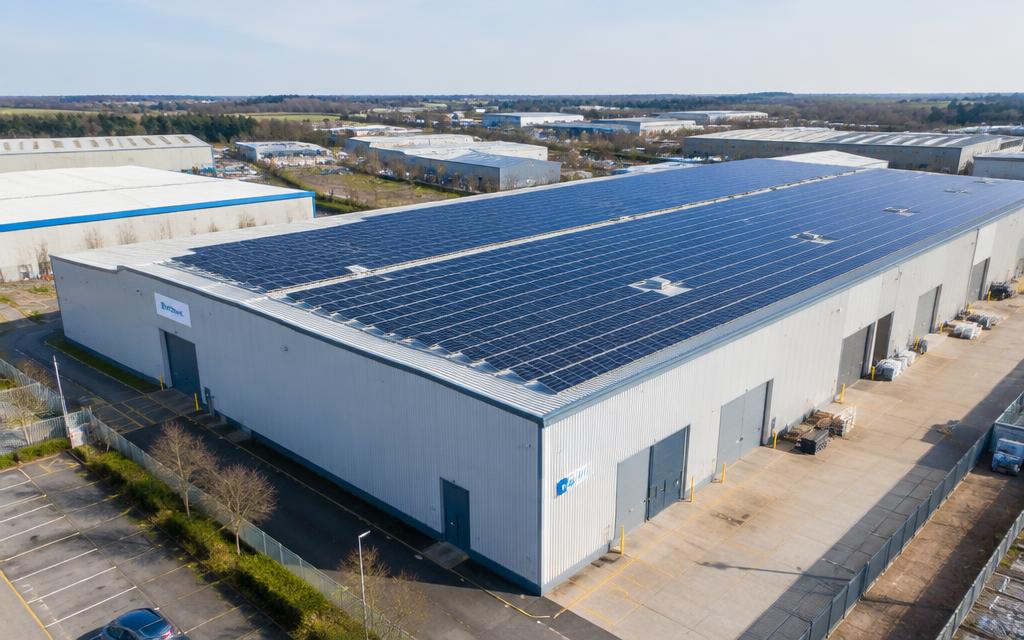
| Roof area | Often around 450–650 m², subject to layout |
| Panel count | Roughly 200–240 modern modules |
| System life | Commonly modelled over 25+ years |
What determines payback?
The value of generation depends chiefly on self-consumption. If 80,000 kWh replaces electricity costing 24p per kWh, its first-year avoided purchase value would be £19,200 before maintenance, finance, degradation and other model assumptions. Exported units should be valued separately at the actual export tariff.
- Business electricity price and tariff structure
- Percentage of generation used on site
- Operating hours and seasonal demand
- Capital cost and finance terms
- Maintenance, degradation and inverter allowances
- Any export income or curtailment
Is 100kW the right size?
A round capacity should never drive the design. The right system may be smaller where daytime demand or roof area is limited, or larger where a site can use more generation. Interval consumption data allows the proposed output to be matched against real demand throughout the year.
The next step is a desktop feasibility study followed by structural, electrical and access surveys. These checks turn an indicative 100kW scenario into an investable site proposal.
Written by Horizon Commercial Solar. Reviewed by our commercial solar team and updated 23 September 2026. Figures are illustrative and depend on site conditions, tariffs and project scope.